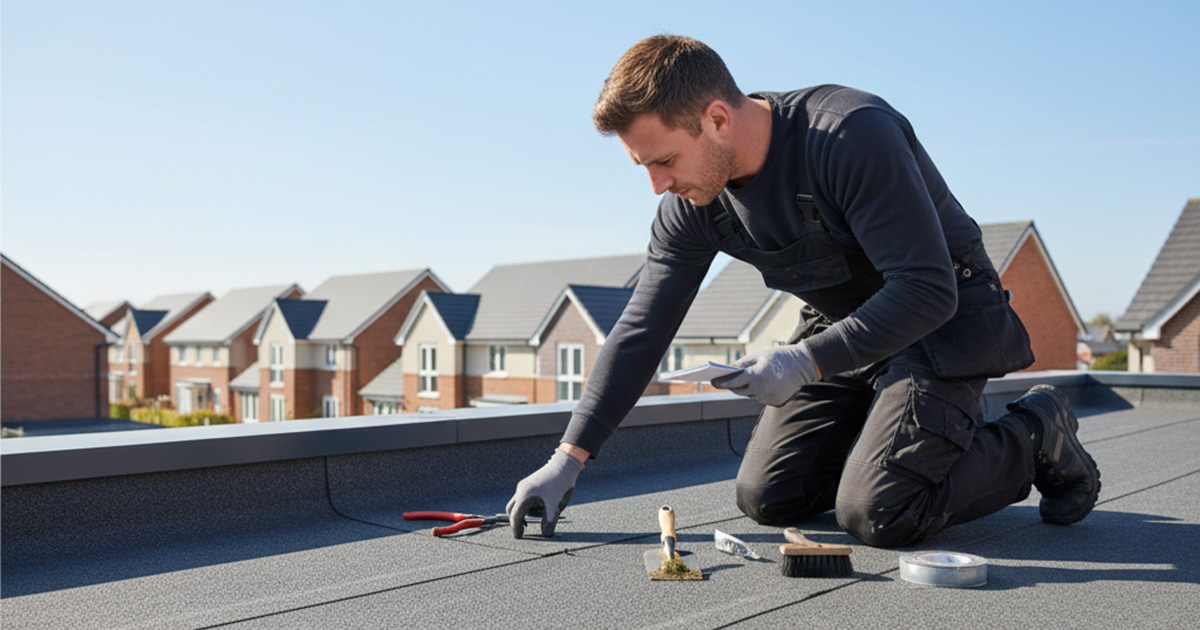
Flat roofs in Montreal are more vulnerable to the elements than their sloped counterparts. Their horizontal position means water, dirt, and debris can easily build up, speeding deterioration and damage. Flat roof maintenance helps detect and address issues such as weak seams and cracks before they turn into major issues. Timely maintenance also ensures your insulation remains intact, preventing energy loss.
Here are 5 flat roof maintenance tips for Montreal property owners to follow.
1. Dirt & Debris Cleanup
Flat roofs can quickly accumulate debris in the form of dirt, leaves, branches, and dust. Such debris can easily clog the drainage system and cause water buildup, leading to leaks and roofing deterioration.
When you clean your flat roof regularly, the water will flow freely. Make sure to sweep it clean regularly and remove any debris. This simple practice can help maintain the roof’s condition and reduce any chances of long-term damage.
2. Ensuring Proper Drainage
Flat roofs require an effective drainage system because they cannot allow water to flow as freely as sloped roofs. Standing water can significantly shorten your flat roof’s lifespan. It is recommended to:
- Check drains, gutters, and scuppers for any signs of blockages and wear
- Clear any clogs
- Regrade sections of the roof
It is further suggested to inspect your roof after every rain. When drainage issues are addressed promptly, you will be preventing costly repairs or replacements.
3. Check the Seams & Edges
When it comes to flat roofs, seams and edges can be highly vulnerable areas. They are prone to splitting and damage. Make sure to regularly inspect these areas for proper sealing. Expert roofing companies such as Toiture Vincent can detect even small gaps in time to prevent water penetration that can cause structural problems.
4. Monitor & Reapply Roof Coatings
Roof coating can make your flat roof more resistant to the effects of the elements. Common coatings include acrylic, silicone, polyurethane, and elastomeric-asphalt emulsion, and they serve a multitude of protective purposes, including:
- Acting as a waterproofing layer
- Preventing thermal expansion damage
- Shielding from UV rays
Certain coatings can also provide protection against minor physical impacts and reflect light to improve energy efficiency. Over time, the coatings can degrade. Regular inspection and reapplication can help you enjoy the above-mentioned benefits for longer without having to repair or replace your flat roof.
5. Set Up an Inspection Schedule
Setting up professional inspections can play a big role in identifying potential issues. An ideal inspection schedule should have the following structure:
- Bi-Annual Visual Inspection: Have your flat roof inspected twice a year for signs of wear, standing water, or debris. Spring and fall are the ideal times of the year for these routine visual roof-health inspections.
- 5-Year Inspection: Have a licensed flat roof contractor, such as Toiture Vincent, conduct a technical evaluation of your roof’s integrity. An experienced contractor can help create a thorough maintenance plan based on your roofing material, system, and condition.
As mentioned above, your flat roof deserves a check after every heavy rain, snowfall, high wind, and severe hail. Ensuring timely checks can help keep your roof durable and free from leaks.
You value your flat roof for its cost-efficiency, thermal benefits, and optimized space utilization. Yet, these roofs are prone to a wide range of potential issues, including ponding water, drain blockages, and seam separation. Standing water can speed up the wear of roofing materials. This roof can be damaged not just by the elements, but also by foot traffic. While there are many benefits to a flat roof, it is recommended to ensure timely and proper maintenance to add more years to its lifespan.